- Request Free Quote
- 408-206-0832
- info@baybuildersconstruction.com

The Complete Home Building Process: How General Contractors Manage Design, Engineering, Budgeting, and Construction
May 11, 2026When you’re starting a home building project, understanding how general contractors manage design, engineering, budgeting, and construction is essential. They guide you through project planning and facilitate communication between all parties, making certain your vision aligns with regulations. With their expertise, they estimate costs effectively and oversee subcontractors to maintain timelines. Architects create functional designs based on your input, while engineers guarantee safety and compliance with local codes. As you navigate this multifaceted process, knowing each phase can help prevent unexpected challenges. Stay engaged, and you’ll discover tips to enhance your experience throughout the journey.
Introduction
Understanding the home building process is essential for anyone looking to construct their dream residence. It’s a multifaceted journey that begins with defining your vision and gathers momentum through various stages. You’ll quickly realize that harnessing general contractor services is critical. These professionals provide the necessary guidance to navigate architectural design, structural engineering, and compliance with strict building codes, especially in regions like California.
A significant aspect of this process is effective construction project management. A skilled General Contractor not only coordinates the different phases but also controls timelines and budgets, ensuring that your project remains on track. Their expertise enables you to focus on the design elements while they manage subcontractors, oversee material procurement, and address any unforeseen challenges that arise.
For custom home builders in California, understanding local regulations and environmental factors is important. This knowledge helps you craft a home that’s not just aesthetically pleasing but functional and compliant. Keeping these elements in mind sets the stage for a smoother home-building experience, making it necessary to engage professionals who can elevate your vision into reality.
Role of a General Contractor in Custom Home Projects
When starting on a custom home project, having a general contractor by your side can make all the difference in guiding through the complexities of construction. A general contractor serves as the linchpin in this multifaceted process, overseeing everything from budgeting to execution. By coordinating with design build contractors, they guarantee that architectural designs align seamlessly with structural requirements and client expectations.
One key aspect of a general contractor’s role is construction cost estimation. They take time to analyze materials, labor, and timelines, providing you with an accurate budget that reflects your unique project needs. This financial insight is vital in preventing unexpected expenses down the line.
Additionally, a skilled general contractor manages subcontractors, schedules, and permits, streamlining operations to minimize delays. Their experience traversing building codes and regulations—especially in areas with strict guidelines—enhances compliance, confirming your custom home is both safe and legally sound. By facilitating communication amongst all parties involved, they transform your vision into reality, delivering a high-quality custom home that meets your standards. Ultimately, involving a general contractor enables a smoother, more efficient building process, making your custom home project a success.
Initial Consultation and Project Planning
The initial consultation and project planning stage sets the foundation for a successful custom home build. During this important phase, you’ll discuss your vision, requirements, and budget with your general contractor. This dialogue helps shape your idea into a feasible project within the necessary parameters of the home building process.
Your contractor will bring insights on architectural design and build aspects, guiding you through options that align with your goals. They’ll also introduce you to the construction budgeting process early on, ensuring transparency regarding costs and potential financial constraints.
In this initial meeting, it’s essential to establish a clear timeline and milestones, which allow you to manage expectations and keep the project on track. The contractor will gather information about your land, zoning regulations, and any specific requirements, helping to identify potential challenges ahead of time.
Architectural Design and Space Planning
Architectural design and space planning are critical components that translate your vision into tangible living spaces, ensuring functionality and aesthetic appeal. This process begins with understanding your lifestyle needs and goals, which ultimately shapes the layout and flow of your home. You’ll work closely with architects and designers who understand how to incorporate principles of structural engineering residential to make sure your design is not only beautiful but also sound and sustainable.
In creating your architectural plans, considerations like natural light, room orientation, and accessibility come into play. These aspects greatly influence your home construction timeline, as design modifications often lead to adjustments in permitting and building phases. Each change must be carefully evaluated for its impact on both timing and overall costs.
As the design evolves, communication with your general contractor becomes essential. They play a pivotal role in guiding you through the interconnected layers of design, ensuring compliance with local building codes and timelines. By establishing a strong foundation in architectural design and space planning, you set the stage for the successful realization of your dream home.
Creating Functional Floor Plans and Layouts
During the initial stages of home design, creating functional floor plans and layouts is essential to transforming your vision into a practical reality. You’ll want to reflect on how each room interacts with others, guaranteeing that flow and accessibility are maintained. Start by identifying your needs—number of bedrooms, bathrooms, and common spaces—and prioritize them according to your lifestyle.
As you sketch your floor plan, pay attention to natural light, views, and traffic patterns. Think about where windows will be placed to maximize sunlight and how door openings can ease movement between rooms. It’s important to balance openness with privacy; for instance, placing living areas in proximity while isolating bedrooms can enhance comfort.
Utilizing software tools or collaborating with a designer can facilitate revisions, helping you visualize how adjustments affect the overall space. Confirm your design complies with local building codes, as this can affect your chosen layout. Ultimately, a well-thought-out floor plan not only enhances your day-to-day living but also adds value to your home, setting the foundation for both functionality and aesthetic appeal.
Structural Engineering and Safety Considerations
In any home building project, addressing structural engineering and safety considerations is essential to guarantee a sturdy and secure dwelling. Your home’s foundation, framing, and roof must all be designed with an eye toward load-bearing capacity and resistance to environmental factors. Engaging a qualified structural engineer is essential; they’ll assess your project’s specific needs and local conditions, making sure your home can withstand earthquakes, wind, and other potential hazards.
Additionally, it’s important to reflect on materials and construction techniques that maximize safety. For instance, selecting high-quality, durable materials can prevent structural failures over time. Regular communication with your general contractor ensures that all aspects of structural integrity are addressed throughout the construction process. They’ll oversee that engineers’ specifications are adhered to, minimizing risks during builds.
Don’t overlook the importance of safety during construction. Proper scaffolding, equipment, and site management are key to protecting workers and future inhabitants. By prioritizing structural engineering and safety, you not only create a visually appealing home but also mitigate risks, making sure your investment remains sound and secure for years to come. Ultimately, a focus on these areas will yield a robust, lasting structure.
California Building Codes and Compliance Requirements
Steering through California’s building codes and compliance requirements is crucial for anyone involved in home construction, especially given the state’s unique environmental challenges and legislative landscape. California enforces strict codes that encompass various aspects, including structural integrity, energy efficiency, and environmental impact. Title 24 is particularly significant, as it sets standards for energy conservation in residential buildings, mandating compliance with rigorous efficiency metrics.
As you navigate these regulations, you’ll need to pay close attention to local amendments that may further refine state codes. This means engaging with city and county building departments early in the planning process to guarantee adherence. It’s critical to make certain your plans meet all zoning, fire safety, and accessibility codes as well. Failing to adhere could result in costly delays or necessitate expensive redesigns, which can disrupt your project timeline.
Having a general contractor well-versed in California’s compliance landscape can streamline this process. They’ll understand how to maintain dialog with inspectors and effectively manage the permit application process, allowing you to focus on bringing your vision to life while making sure that everything meets state standards.
Budget Estimation and Cost Planning Strategies
When it comes to building a home, accurately estimating your budget and planning for costs is essential to avoid financial pitfalls. Start by determining a total project budget, which should include land acquisition, construction, permits, and additional expenses like landscaping and interior finishes. It’s wise to account for at least a 10-20% contingency to cover unexpected costs.
Next, break down the budget into specific categories. Allocate funds for labor, materials, and equipment, ensuring you understand market rates for each. Consulting with your general contractor can provide valuable insights into realistic pricing, especially given local building codes and regulations.
Furthermore, stay updated on material costs and potential price fluctuations. Engaging in regular communication with suppliers and subcontractors will help you make informed decisions, potentially securing better deals. Use tracking tools or software for budget management, allowing you to monitor expenditures in real-time.
Lastly, revisiting and adjusting your budget regularly as the project progresses can help you manage cash flow efficiently. By adopting these strategies, you’ll be well-equipped to maintain financial control throughout the home-building process.
Material Selection and Value Engineering
Selecting the right materials plays a critical role in both the overall quality and cost-effectiveness of your home building project. As you navigate this process, it is important to balance aesthetics, functionality, and budget constraints. Early on, your choices can greatly influence the long-term performance and maintenance requirements of your home.
Value engineering comes into play as you evaluate alternative materials that may reduce costs without sacrificing quality. You’ll want to collaborate closely with your general contractor, analyzing different options and considering factors like durability, energy efficiency, and environmental impact. For instance, you might discover eco-friendly materials that not only enhance sustainability but could also qualify for tax incentives.
It’s also imperative to factor in local building codes and climate conditions, as these can dictate specific material requirements to guarantee safety and efficiency. This strategic approach to material selection allows you to maximize your investment while achieving your desired aesthetic and functional outcomes. Ultimately, taking the time to carefully assess your material choices and incorporate value engineering strategies will help you create a home that aligns with your vision and budget.
Project Timeline Planning and Scheduling Phases
A well-structured project timeline is fundamental for the success of your home building journey. This timeline serves as a roadmap, outlining key phases and deadlines to guarantee everything runs smoothly. At the outset, your general contractor will break down the entire construction process into distinct stages, such as site preparation, foundation work, and finishing touches. This segmentation allows for accurate scheduling and efficient resource allocation.
As construction progresses, dependency management becomes essential. You’ll need to know which tasks rely on others’ completion to avoid bottlenecks. For example, the roofing can’t begin until the framing is done. Regular updates and adjustments to the timeline are necessary, incorporating any unforeseen delays or changes in scope. Communication with subcontractors is crucial during this phase to guarantee everyone’s aligned and aware of their responsibilities and deadlines.
Your general contractor will also factor in seasonal weather changes and local events that might impact construction speed. With a vigilant eye on the timeline, they’ll prioritize tasks effectively, maintaining momentum toward your completion goal. By establishing a clear project timeline, you’re setting the stage for a successful home building experience.
Permit Approvals and Pre-Construction Steps
Maneuvering the maze of permit approvals and pre-construction steps is essential for setting the right foundation for your home building project. Before breaking ground, you’ll need to gather necessary documentation, which typically includes site plans, architectural drawings, and engineering details. Understanding local building codes and zoning laws is imperative, as these regulations directly impact your project’s timeline and budget.
Working with a skilled general contractor can simplify this process, as they’ll know what permits are needed and help you navigate the intricacies of local regulations. Often, you’ll encounter timelines for permit approvals that can vary drastically by municipality, so early planning is key.
Don’t forget to reflect on potential fees associated with permits and inspections, as they can add unforeseen costs. Once all permits are obtained, it’s essential to perform a pre-construction meeting with everyone involved, ensuring that all parties are aligned on expectations, timelines, and responsibilities.
Site Preparation and Foundation Work
Preparing the site for construction and laying the foundation are critical steps that establish the stability and safety of your home. First, you’ll need to clear the designated area, which involves removing vegetation, rocks, and any debris. This guarantees a clean slate for your build and helps to mitigate potential hazards. Following this, grading the land is essential to create a level surface, which prevents future issues with drainage or uneven settling.
Next, a professional surveyor will mark the boundaries of your new home, confirming it’s positioned correctly and complies with local regulations. Afterward, excavation begins, where trenches or holes are dug according to the foundation design. This is a crucial step, as improper excavation can compromise the entire structure.
Once the ground is prepared, you’ll move on to foundation work. This often includes pouring concrete footings, which support the foundation and distribute weight evenly. Depending on your design, you might choose a slab, crawl space, or basement. At this stage, it’s imperative to involve experts to guarantee that the foundation will withstand potential soil shifts and added stress over time. This foundational work is key to a safe and durable home.
Framing and Structural Development
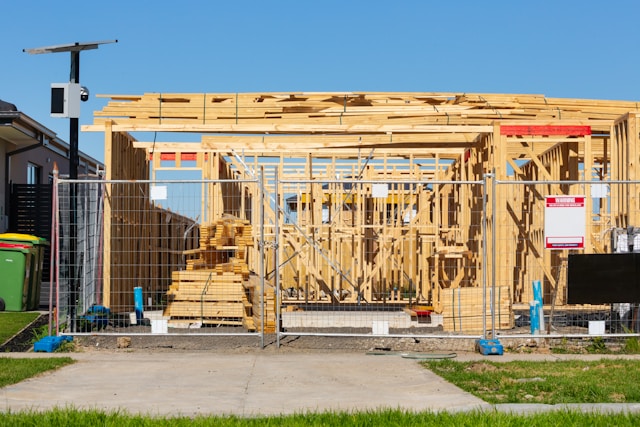
With the foundation secure, the next phase involves framing and structural development, where the skeleton of your home begins to take shape. This stage is vital, as it establishes the framework that supports your home’s walls, roof, and overall architectural integrity. You’ll typically see wood or steel framing used, depending on your design and budget.
During this phase, contractors will erect vertical studs and horizontal beams, ensuring they comply with local building codes and regulations. It’s important to check that the measurements are precise; even minor errors can lead to significant structural issues later on. You’ll want to stay engaged with your general contractor to confirm that the framing reflects the architectural design accurately.
Structural engineers may also conduct inspections to guarantee that the load-bearing elements are appropriately positioned and secured. This is where decisions regarding window and door placements come into play, impacting both aesthetics and functionality. Be sure to ask questions and address any concerns during this time, as this framework is what will support your home for years to come. Investing in quality framing now will definitely pay off in both durability and long-term home value.
MEP Systems Installation and Coordination
The installation and coordination of MEP (Mechanical, Electrical, and Plumbing) systems are important steps in the home building process, often determining the functionality and efficiency of your new home. Effective MEP integration not only enhances comfort but also guarantees safety and regulatory compliance, especially in regions with stringent codes like California’s Title 24.
During this phase, meticulous planning and collaboration among various teams are vital. The general contractor coordinates with MEP specialists to draft a thorough layout, making certain that all systems fit seamlessly within the home’s framework. This involves careful routing of ducts, pipes, and electrical wiring, minimizing interference and optimizing performance.
Unexpected challenges might arise, such as spatial conflicts or equipment access issues. It’s your contractor’s job to anticipate these hurdles, facilitating proactive solutions to avoid costly delays. Regular on-site inspections confirm that installations meet your specified designs and compliance standards.
Effective MEP coordination not only saves you time and money but also elevates the overall quality of your home. By prioritizing these systems, you’re investing in a sustainable and comfortable living environment tailored to your needs and lifestyle.
Interior and Exterior Finishing
Interior and exterior finishing stages play an essential role in transforming your house into a home, showcasing your personal style and guaranteeing functionality. During this phase, you’ll see the implementation of design elements that enhance both aesthetics and usability. For interiors, think about choices like paint colors, flooring materials, cabinetry, and hardware. Each selection should harmonize with your overall vision and meet your day-to-day needs.
Exterior finishing involves the envelope of your home. It includes siding, roofing, windows, and doors, all contributing to curb appeal and energy efficiency. You’ll want to verify that your choices are not only visually appealing but also compliant with local building codes and weather-resistant.
Attention to detail during these stages can save you future headaches. It’s critical to collaborate with your general contractor to confirm that installations are executed correctly, as poor finishing can lead to issues like moisture intrusion or insulation problems down the line. Finally, don’t overlook the importance of final touches, such as landscaping and outdoor fixtures, which can dramatically boost your property’s overall appeal. Effective communication with your contractor will allow you to navigate this pivotal stage smoothly.
Vendor and Subcontractor Management
Effective vendor and subcontractor management is vital for a successful home building process, as it directly impacts the quality and timeliness of your project. You’ll need to establish clear communication channels from the start. This transparency helps guarantee that each vendor and subcontractor understands their responsibilities, deadlines, and the overall project timeline.
When selecting vendors and subcontractors, prioritize those with proven track records and reliable references. Assess their past work and confirm they align with your project’s needs and standards. After onboarding, regular check-ins are imperative; they allow you to monitor progress and address any issues promptly. Utilize project management software to track timelines and budgets, making adjustments as needed.
Maintaining a good relationship with your subcontractors can lead to smoother collaboration. Make sure you address concerns and provide constructive feedback, fostering an environment of trust and mutual respect. Timely payments also enhance this relationship, incentivizing high-quality work on schedule.
Quality Control and Safety Compliance
Proper quality control and safety compliance are crucial throughout the home building process, guaranteeing that every aspect of construction meets established standards and regulations. As a general contractor, you’ll need to implement a thorough quality control plan that covers every phase of the project, from foundation to final inspection. This plan should include regular assessments of materials, workmanship, and adherence to design specifications.
Moreover, safety compliance is non-negotiable. You must familiarize yourself with local safety regulations and guarantee that all subcontractors and workers are trained on these standards. Conducting regular safety audits can help identify potential hazards before they become issues.
Documentation plays an important role in both quality control and safety compliance. You’ll want to maintain detailed records of inspections, materials used, and safety meetings. This documentation can serve as crucial proof of compliance during inspections and can protect you from potential liability issues.
Ultimately, prioritizing quality control and safety not only enhances the integrity of the home but also fosters trust among clients, guaranteeing they feel secure in the quality of their investment.
Progress Tracking and Client Communication
Keeping your project on track requires diligent progress tracking and open lines of communication with clients. As a general contractor, you’ll need to utilize various tools—like project management software—to monitor every aspect of the build process. Regular updates on timelines, material deliveries, and labor schedules not only keep you organized but also help build trust with your clients.
Establish a routine for progress meetings, whether in-person or virtual. This keeps everyone informed and helps address any emerging issues promptly. Sharing visual updates, such as photos and progress reports, can make it easier for clients to see how their project is evolving and reassure them that everything is on schedule.
You should also encourage feedback during these communications. Understanding clients’ concerns or preferences allows you to adjust plans, avoiding potential misunderstandings down the line. Transparency about delays or budget adjustments is essential—it’s better for clients to hear this from you than be kept in the dark. Ultimately, effective progress tracking and communication foster a collaborative environment, ensuring your project runs smoothly while satisfying all parties involved.
Final Inspections and Project Approval
As your project approaches completion, final inspections become a key milestone in the home building process. These inspections guarantee that your home meets local building codes and regulations, addressing any areas that might need attention. You’ll want to be prepared for multiple inspections, including structural, electrical, plumbing, and final occupancy checks.
During this phase, inspectors examine the work to confirm compliance with the approved plans. Your general contractor plays an essential role in coordinating these inspections, ensuring that all necessary permits are in place and the work is completed according to standards. Any issues identified during inspection must be resolved before you can receive the final approval for occupancy.
You should also maintain open communication with your contractor during this stage. It’s important to discuss any concerns or adjustments post-inspection, as resolving these might impact the timeline. Once all inspections are cleared and approvals granted, you can move forward confidently into the final steps of your project, which may include acquiring your certificate of occupancy and finalizing any outstanding payments. This process not only affirms the quality of your home but gives you peace of mind as you prepare to enjoy your new space.
Conclusion
Building a custom home is not just about erecting walls and roofs; it’s an extensive process that requires meticulous planning and execution. As you navigate this journey, you’ll realize the importance of a skilled general contractor, who acts as the linchpin in coordinating various phases. They guarantee compliance with regulations, especially in stringent regions like California, where codes like Title 24 add layers of complexity.
By effectively managing timelines, subcontractors, and budgets, a proficient contractor helps mitigate risks that could derail the project. You’ll appreciate a streamlined approach, where each stage—from design and engineering to construction—aligns seamlessly with your vision and expectations. Their attention to detail not only expedites the process but also maintains the highest quality standards, ultimately leading to a safe and aesthetically pleasing home.
When you invest in a custom-built home, you’re not just creating a property; you’re crafting a unique living space designed specifically for you. Engaging an experienced contractor guarantees that your investment translates into a tangible reality—an efficient, high-quality custom home that reflects your style and enhances your lifestyle. This thorough oversight highlights the value of professional guidance in delivering the home of your dreams.